
Covering Los Angeles Climate Week by Harsha Saxena, CEO IICSR
- harshas2883
- Apr 12
- 5 min read
LA Climate Week – Blog 1: IICSR Founder’s Reflection on Climate, Capital, Innovation and Human Connection

One blog is far too little to capture the energy of Angelenos. Los Angeles during Climate Week is not merely a city hosting events; it becomes a living ecosystem of ideas, conviction, collaboration and action. Through this blog series, I will be sharing my key learnings from every event I attend, along with my reflections as Founder of IICSR and as a global advocate of sustainable development.
A Warm Arrival in Los Angeles
The day I landed in Los Angeles, I could not help but notice how similar the weather felt to my hometown, Mumbai—warm, humid and instantly familiar. In that moment, I felt at home and silently thanked the Lord Sun for welcoming me so gently into this new chapter of learning and engagement.
Earth Summit 2026: A Powerful Beginning

My journey began with Earth Summit 2026, organised by AILA Kate Guernsey and Dr Shanti Rao. It was inspiring to witness a true Public-Private-Partnership approach reflected in the opening remarks by Christopher Pimentel, Mayor of El Segundo and Michael Anderson, Climatologist, State of California.
One of the most eye-opening sessions for me was the talk by Dr Shailesh Rao, author of There IS a Planet B. His reflections on the climate impact of animal meat challenged conventional thinking and invited deeper introspection. As a vegetarian myself and someone who is often asked about protein intake, I raised the same question to him. His response was striking in its simplicity: he referenced herbivorous mammals such as elephants, which derive all their nutrition from plants. I am certain that this was the unspoken question in the minds of many in the room. I was also touched by his generosity in signing a copy of his book and presenting it to me.
AI, Energy and Climate: Questions the World Must Answer
The panel discussion I related to most was the session on the impact of AI on California’s

climate, moderated by Shanti Rao. I was truly aghast at the statistics shared by Daniel Howard, CEO of Quantum Energy, on the energy usage required to run 1 GB of data centre activity. The implications are serious and global. It led me to question whether nuclear energy may become a necessary path forward, because conventional energy systems alone may not be enough to power the scale of the digital ecosystem being built.
I also raised concerns around the policies required for this sector and whether green energy, particularly solar, could adequately support such demand. The response suggested that this remains uncertain. Isabelle von Lockner of Accenture spoke about how AI is bringing ease and efficiency into our lives, yet I voiced my concerns around data privacy and confidentiality with OpenAI, Anthropic and similar large language models. Her response was candid: it is still a work in progress. That, to me, captures the reality of our times. Technology is advancing rapidly, but laws, regulations and policy frameworks are still catching up. This is a subject I intend to explore much more deeply in my upcoming panel discussions and writings.
The Business of Progress

The following panel, The Business of Progress, brought fresh and necessary perspectives. Walela Makonnen offered an interesting lens on the broader impact of business, while Alena Solonina shed light on what investors increasingly expect from businesses in today’s changing world. The discussion reinforced an important truth: sustainable development can no longer remain on the margins of strategy; it must sit at the centre of business value creation.
Resilience & Long Horizons: A SidePorch Convening
The SidePorch event brought together one of the most diverse sets of speakers I encountered during LA Climate Week. Many people I met described it as “the event” of the

week, and I could immediately understand why. I especially enjoyed the discussion on investing across the ecosystem, with contributions from Amber Martinez of LA Parks Foundation, Mitch Rubin of Elemental Impact, Brendan Bell of Aligned Climate Capital, Matt Gonser, Climate Resilience Officer for the County of Los Angeles, and moderator Alexander Kapur of SidePorch.
The discussion helped me appreciate the different approaches and expectations around climate investing, and also how much more support, alignment and risk appetite are still needed. After lunch, the session titled Innovating at the Pace of Problem stood out, particularly because Lily Bui of SoCal Grantmakers shared practical insights into the realities of ground-level grantmaking and meaningful engagement with funders.

For me, the true highlight of the event was the people. Every person I met felt like a book waiting to be opened, read and absorbed. My mind was seeded with thoughts, questions and inspiration from many different stories—many of which I am still processing. I would also like to highly commend Sean Knierim, Andy Riemer and the entire SidePorch team for creating such an exceptional experience.
Carbonauts: Regenerative Thinking and New Possibilities
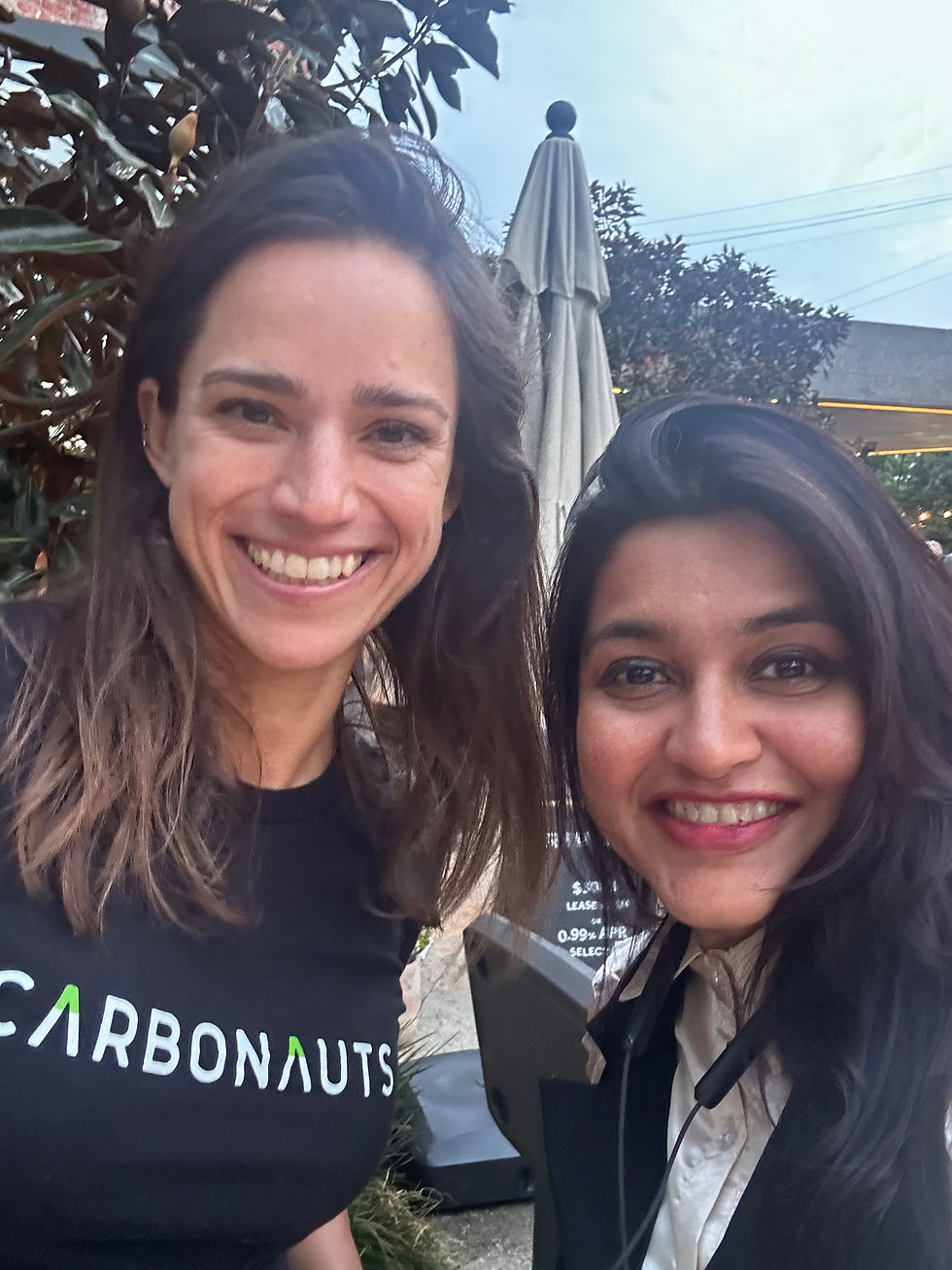
The evening was hosted by Katherine Jones of Carbonauts. The conversations there opened a refreshing and much-needed line of thought around regenerative investing and regenerative labour with integrity and systemic impact. Indy Rishi Singh brought a distinct and thoughtful perspective by connecting farming practices from Haryana to California. It was a reminder that sustainability is often most profound when local wisdom meets global dialogue.
Learning from Los Angeles’ Environmental History
Another deeply meaningful recommendation that emerged during the week was Dr Ann

Carlson's book, Smog & Sunshine. The story of how Los Angeles tackled air pollution, the role of women in shaping that change, and especially the advocacy of the “Mothers of East LA,” whose efforts helped drive stronger regulations and policies for the automobile industry, is both inspiring and necessary reading for anyone serious about environmental reform.
The Social Enterprise Collective: From Chaos to

Coordination
The powerful week concluded with The Social Enterprise Collective, organised by Bree Jensen. The panel, From Chaos to Coordination: How Cross-Sector Collaboration Builds Recovery That Actually Works for Communities, touched something deep within. Each panellist had been directly affected by the LA wildfires and the difficulties created by the insurance system.
The representation on the panel came from across sectors, including Kathryn Barger, LA County Supervisor, along with GoFundMe, Pasadena

Community Foundation and Day One. What made the session so powerful was the authenticity of the stories. They were not abstract discussions. They were real experiences, spoken from heart to heart and felt from soul to soul. I had the opportunity to meet stakeholders across the spectrum—representatives of the people, affected communities, those who stood by them in difficult times, and advocacy organisations working to rebuild with dignity and resilience.
Looking Ahead
As I continue to move across events and engage more deeply with the state of CSR, Sustainability and ESG in one of the most developed parts of the world, I look forward to sharing richer analysis in the days ahead. LA Climate Week is not just a gathering of events; it is a mirror reflecting where the world is, and where it still needs to go. I am grateful to witness it, learn from it, and contribute to the larger global conversation.


Comments