
Plastic Tax: Are We Taxing Plastic or Investing in Its Substitutes?
Plastic—the mixture of chemicals forming one of the longest-lasting materials in human life.
Very much visible to our eyes, yet many times invisible. Consumed in edibles, absorbed through our skin and carried in the clothes we wear.
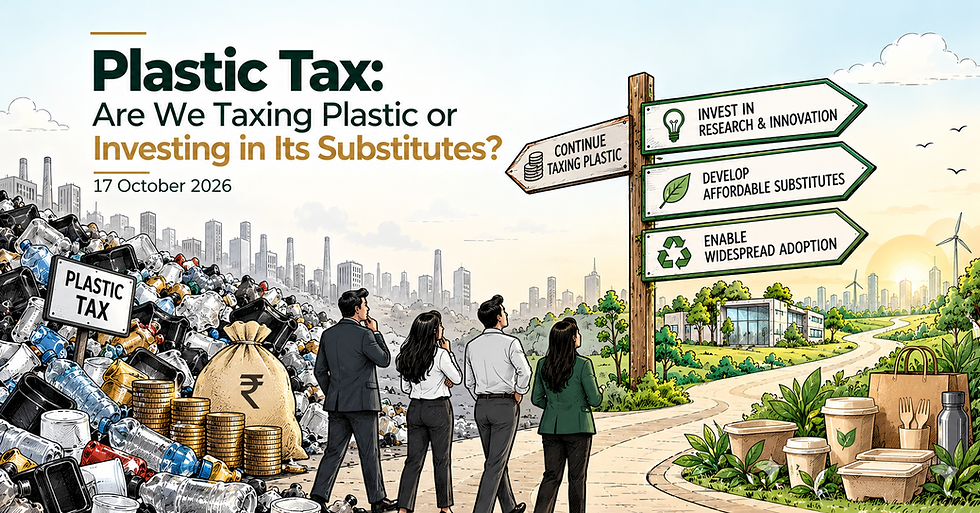
In spite of so much research on plastic, regulations, laws and bans on single-use plastics, this one material still survives and thrives. Plastic taxes, regulations and bans exist, but are we investing enough in research, innovation and the development of affordable, sustainable substitutes? Are we doing enough to promote their adoption, or are we more focused on taxing plastic than replacing it?
We have carbon taxes, Carbon Capture, Utilisation and Storage (CCUS), the Carbon Border Adjustment Mechanism (CBAM) and numerous carbon credits. However, measuring their real impact remains a challenge.
Carbon emissions are invisible and intangible, yet we are all running behind monetising them. We are still figuring out the pricing of carbon credits, effectively assigning a monetary value to something we cannot physically see or touch.
Being a learner of energy healing, I understand the significance of invisible forces and their influence on human life. But diving a little deeper into the maze of plastic pollution, manufacturing and consumption, I wonder why we are not supporting more extensive research and development to replace this non-perishable material.
I realise this is a USD 963.7 billion global plastics business, according to 2025 market estimates, and one projected to cross USD 1 trillion in 2026.
NGOs are supported, research and development is funded, and investments are being made to find alternatives. Yet the United Nations Environment Programme estimates that USD 1.64 trillion in investment is needed to transform the plastics system and significantly reduce pollution from short-lived products. The global sustainable packaging market alone was valued at approximately USD 278.1 billion in 2023, with projections of USD 391.1 billion by 2029. But this includes recyclable and conventional materials as well as alternatives to plastic.
Meanwhile, private investment directed towards addressing plastic pollution averaged approximately USD 32 billion annually between 2018 and 2023, with more than 80% going towards downstream solutions rather than preventing pollution at its source.
The question is: Are we investing enough in replacing plastic itself, or are we merely investing in managing its consequences?
Vis-à-vis these investments, billions of dollars are being committed to exploring space and the possibility of human life beyond Earth. NASA’s proposed FY2026 budget alone included more than USD 7 billion for lunar exploration and USD 1 billion in new Mars-focused investments.
Elon Musk may be right in asking, “How long will we live in the cradle of Mother Earth?”
Perhaps, in this lifetime, we may find a way to live on Father Mars, Sister Venus or Uncle Jupiter. Maybe we will invest trillions in making another planet habitable.
But while we search for another home, we continue to pollute the one we already have.
We continue to manufacture, distribute and consume plastic, one of the key contributors to pollution that contaminates our surroundings and threatens ecosystems.
At this stage, I have seen pizzas wrapped in plastic and frozen in the United States, newborns fed through plastic bottles, and numerous clothing materials manufactured using synthetic chemicals and fibres.
I salute the ingenuity of humanity and its extraordinary ability to innovate, including our capacity to manufacture, reform and reuse plastic.
But why not direct that ingenuity towards cleaning up our own cradle, dear humans?
Are we preparing to live beyond Earth before learning how to live responsibly on it?
Do I hear more about plastic credits now? Or will we finally hear more about plastic substitutes?
Are we investing in managing pollution, or in eliminating its source?


Comments