
From Malibu to Santa Monica: Where Climate, Capital, and Code Collide
- harshas2883
- Apr 20
- 4 min read
Reflections from LA Climate Week 2026 By Harsha Saxena, CEO – IICSR

There are weeks that pass. And then there are weeks that stay.
The third week of April in Los Angeles did not just pass—it confronted, challenged, and redefined how I think about sustainability, technology, and the future of our planet.
What struck me most was not just the scale of conversations, but their convergence— Climate was no longer sitting in isolation. It was embedded in finance, infrastructure, entrepreneurship, and human behavior.
And that is where the real story begins.
The Invisible Backbone: AI, Data Centers & the Energy Question
The week began quietly—but powerfully—with virtual sessions on AI data centers, led by insights from Krystin Munson, https://www.linkedin.com/in/kyrstinmunson/, USC Michelson Center.
At first glance, AI feels intangible. But behind every algorithm lies a physical reality—energy, infrastructure, and environmental cost.
The question is no longer: Can AI scale? The real question is: 👉 Can AI scale sustainably?
Because if we get this wrong, the very technology designed to optimize our future could accelerate its depletion.
The LA Reality Check: Sustainability Meets Infrastructure
LA Climate Week teaches you many things. But the most unexpected lesson?
You need a car!
In a city hosting some of the world’s most important climate conversations, accessibility itself becomes a paradox.
Attending multiple events required navigating distances through Uber, Lyft, and fragmented urban planning.
This is not just a logistical inconvenience. It is a systemic signal.
If sustainability cannot solve mobility and accessibility, how do we expect it to solve climate at scale?
Circular LA: Where Sustainability Becomes Tangible
At Circular LA by Buro Happold, shout out to Amy Stanfield https://www.linkedin.com/in/amy-stanfield-297786199/), sustainability was not theoretical—it was tactile.
The session explored R-R (Reduce–Reuse) across industries—from fashion to IT and electronics.

But what stayed with me was not a slide or a statistic.
It was a woman.
An entrepreneur. Sitting with a sewing machine. Upcycling materials—live, in front of everyone.
No jargon. No abstraction. Just action.
Meanwhile, participants from Europe and the UK brought in structured perspectives on:
Plastic waste management
Segregation at source
Circular systems implementation
And I found myself thinking:
👉 India does not lack intent—we need scale, systems, and consistency.
Malibu: Financing the Climate Future
If Circular LA grounded sustainability in action, “Financing the Climate Future” in Malibu elevated it to capital markets and global systems.

Hosted by Rohit Shukla (https://www.linkedin.com/in/rohit-shukla-23810/) Larta institute, the room was filled with investors, thinkers, and operators.
The conversation had evolved.
We were no longer asking: Should we invest in climate?
We were asking: 👉 How do we build portfolios that define the future?
The panel discussion moderated by Lauren Faber (https://www.linkedin.com/in/laurenfaber/) and appreciate the take of Justin Winters (https://www.linkedin.com/in/justin-winters-oneearth/)
One idea stood out deeply:
Green portfolios driven by individual investors
Capital flowing into regenerative agriculture
Climate investing is becoming democratized
This is where climate moves from policy to participation.
SoCal IT Sustainability Forum: The Hard Truth About Technology
Then came the SoCal IT Sustainability Forum, hosted at the Annenberg Community Beach

House.
With Firoz Merchhiya (https://www.linkedin.com/in/ferozmerchhiya/) as host and Steve Rovniak (https://www.linkedin.com/in/srovniak/) as organiser, the forum moved beyond optimism into reality.
I highly appreciate the initiatives taken by Firoz and led by Sunny Wang (https://www.linkedin.com/in/sunny-wang-ba520619/), key to using recycled water for data centres
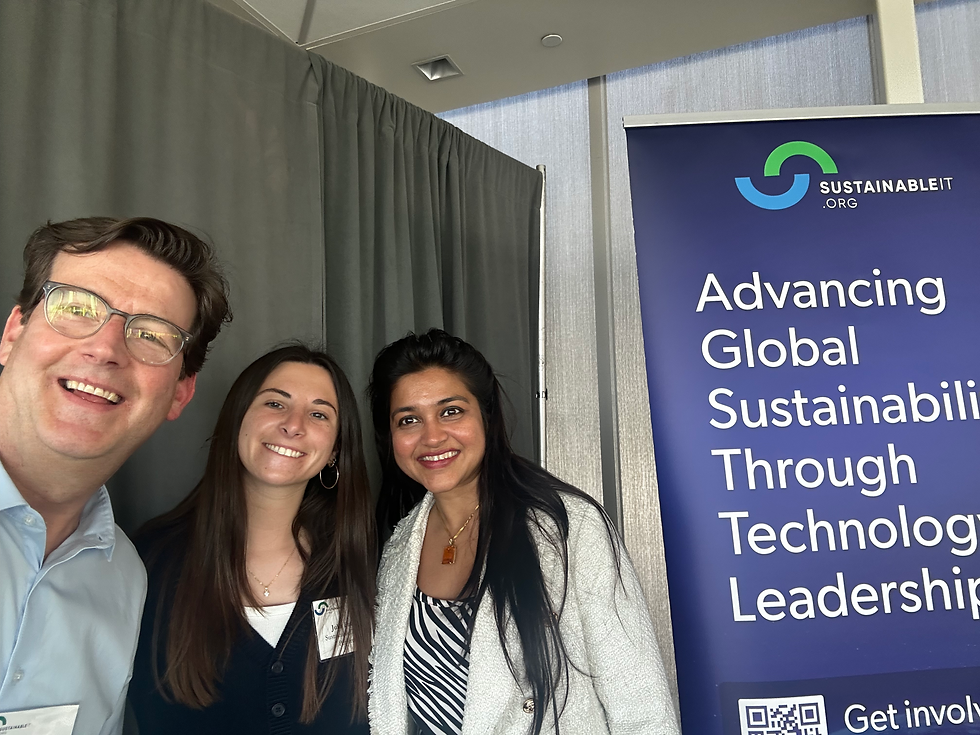
Here, sustainability met the complexity of the IT ecosystem:
Data infrastructure
Cloud dependency
Energy consumption
System inefficiencies
And then came the moment that shifted the room.
Reza Rasool (https://www.linkedin.com/in/rezarassool/) shares about AI- LLMs and gaps in privacy protection, data usage and more.
Raw. Honest. Unfiltered.
It was not about celebrating AI. It was about confronting it.
👉 What are we building? 👉 At what cost? 👉 And who is accountable?
For those of us deeply embedded in AI, it was not just insightful—it was uncomfortable.
Innovation That Matters: SMR
Amidst these conversations, one concept stood out:
👉 SMR – Shingled Magnetic Recording (SMR) Technique by Joseph Suppers(https://www.linkedin.com/in/joe-suppers-56b2aa7/) and Bhupinder Bhullar (https://www.linkedin.com/in/bhupinderbhullar/) of Swiss Vault
An innovation that challenges traditional data storage systems by:
Reducing redundancy
Improving efficiency
Potentially replacing large-scale cloud storage dependencies
If scaled effectively, this could redefine how we think about data, energy, and infrastructure.
Founders House: The Entrepreneurial Pulse
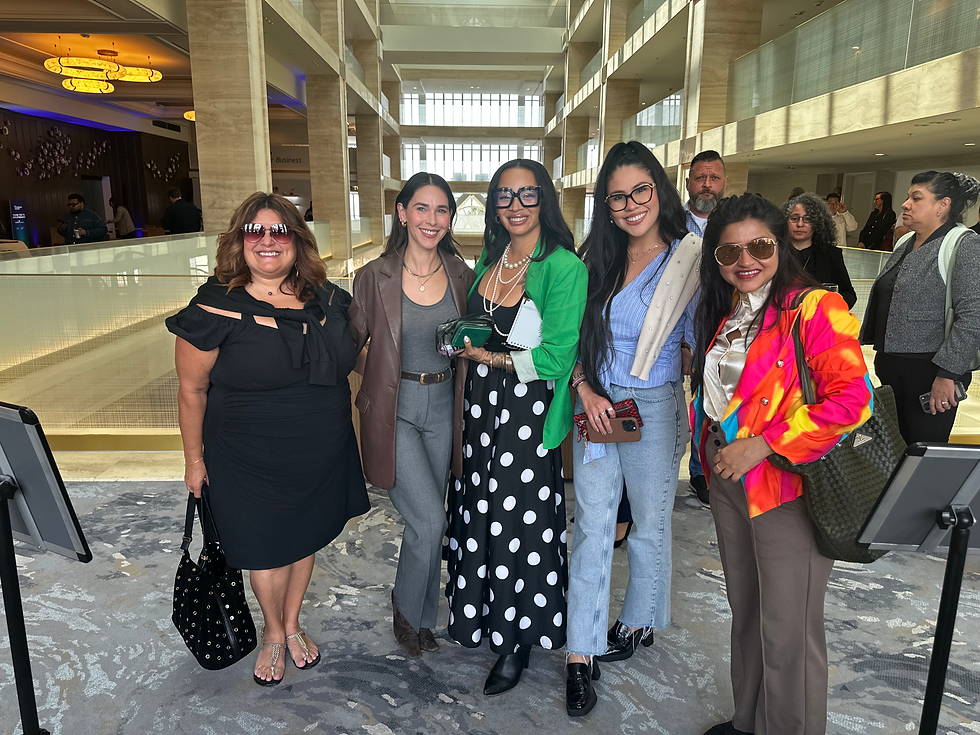
The journey concluded at a Founders Inc / Founders House gathering.
If Malibu was about capital, and SoCal IT was about systems, this was about people who build the future.
Entrepreneurs. Operators. Visionaries.
One of the reflections drew inspiration from Eva Longoria’s (https://www.linkedin.com/in/eva-longoria3/) Stadium initiative, highlighting:

Purpose-driven scaling
Cultural influence in entrepreneurship
The power of storytelling in building movements
Because in the end, climate solutions are not just engineered— they are built, funded, and
believed into existence.
The Convergence That Defines the Future
What did this week ultimately reveal?
That climate is no longer a sector.
It is a system of systems.
And its execution rests on three pillars:
1. Capital → Financing the Climate Future
2. Technology → SoCal IT Sustainability Forum
3. Entrepreneurship → Founders House
Miss one—and the system collapses.
Final Thought
We often speak about saving the planet.
But what I witnessed in Los Angeles was something far more nuanced:
We are redesigning the planet.
Through:
Code
Capital
Collaboration
And the question is no longer whether change is coming.
The question is:
Who will lead it—and how responsibly?
At IICSR, we believe the answer lies in education, collaboration, and action.
Because the future will not be built by intention alone— it will be built by those who execute.


Comments