
The Greenwashing Crisis in ESG Ratings
- harshas2883
- Feb 5
- 2 min read
You’ve likely seen the headlines: oil giants with “A” ESG ratings, fast fashion brands praised for sustainability, and mining companies applauded for governance. If it feels contradictory, that’s because it is.
Welcome to the greenwashing crisis—a growing storm threatening the credibility of ESG (Environmental, Social, and Governance) investing. The idea was simple: evaluate companies not just by profit, but by their impact on people and planet. But today, ESG ratings are often more marketing than measurement.
One Company, Multiple Ratings. Who’s Right?
In 2025, over $41 trillion is invested in ESG-aligned funds. But ask this: how are these companies scored?
A single firm might receive an “AA” from MSCI, a “B” from Sustainalytics, and a “D” from FTSE Russell. Why? Because there’s no global standard. Some ratings emphasize disclosure. Others reward intent. Few capture actual environmental or social harm.
Take BP, which received a high ESG score in 2023 despite expanding fossil fuel projects. Or Tesla, penalized for governance issues but praised for emissions. It’s not that one is wrong—it’s that investors are flying blind.
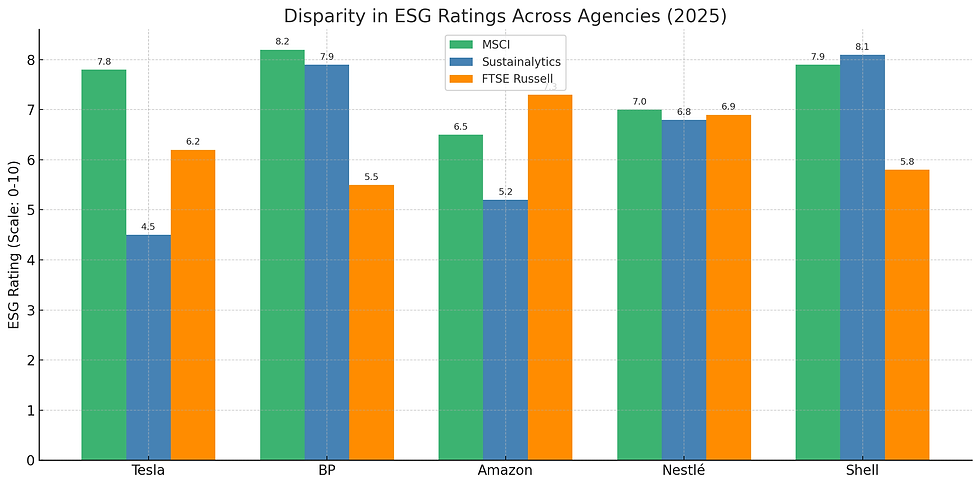
How Greenwashing in ESG Ratings Misleads Investors
The stakes are real. Pension funds, retail investors, and even sovereign wealth portfolios are channeling money into funds that sound sustainable but may not be. A recent EU study found that 42% of ESG-labelled funds failed to meet basic sustainability criteria.
This isn’t just confusion—it’s deception.
Where Do We Go From Here?
It’s time to demand transparency. Standardized reporting. Verified data. Regulators in the EU and US are finally moving to crack down, but the pace is slow.
If you invest, ask how ratings are calculated. If you're in finance, push for unified metrics. And if you’re a citizen, know this: your trust is being traded.


Comments