
Why Carbon Labels Are the Next Big Thing in Retail
- harshas2883
- Apr 23
- 3 min read
In recent years, climate change has shifted from an abstract scientific concern to an urgent societal issue shaping consumer habits and corporate strategies alike. Among emerging innovations aimed at addressing environmental challenges, carbon labeling is poised to revolutionize retail in a way that few have yet fully grasped. But what exactly are carbon labels, and why should every shopper—and retailer—care about them?
Carbon labels are tags or marks on products that provide clear, accessible information about the carbon footprint involved in producing and delivering those goods. This footprint measures the total greenhouse gas emissions generated throughout a product’s life cycle—from raw materials to manufacturing, transportation, and disposal.
The Rise of Conscious Consumerism
Consumers today are more environmentally conscious than ever. A 2023 global survey by NielsenIQ found that 73% of consumers say they would definitely or probably change their consumption habits to reduce their impact on the environment. This shift is not a niche trend; it’s a tectonic shift that’s shaping retail dynamics globally.
Yet, despite increased awareness, many consumers face a crucial gap: a lack of transparent, standardized information on the environmental impact of their purchases. This is where carbon labels come in—not just as information, but as a powerful decision-making tool.
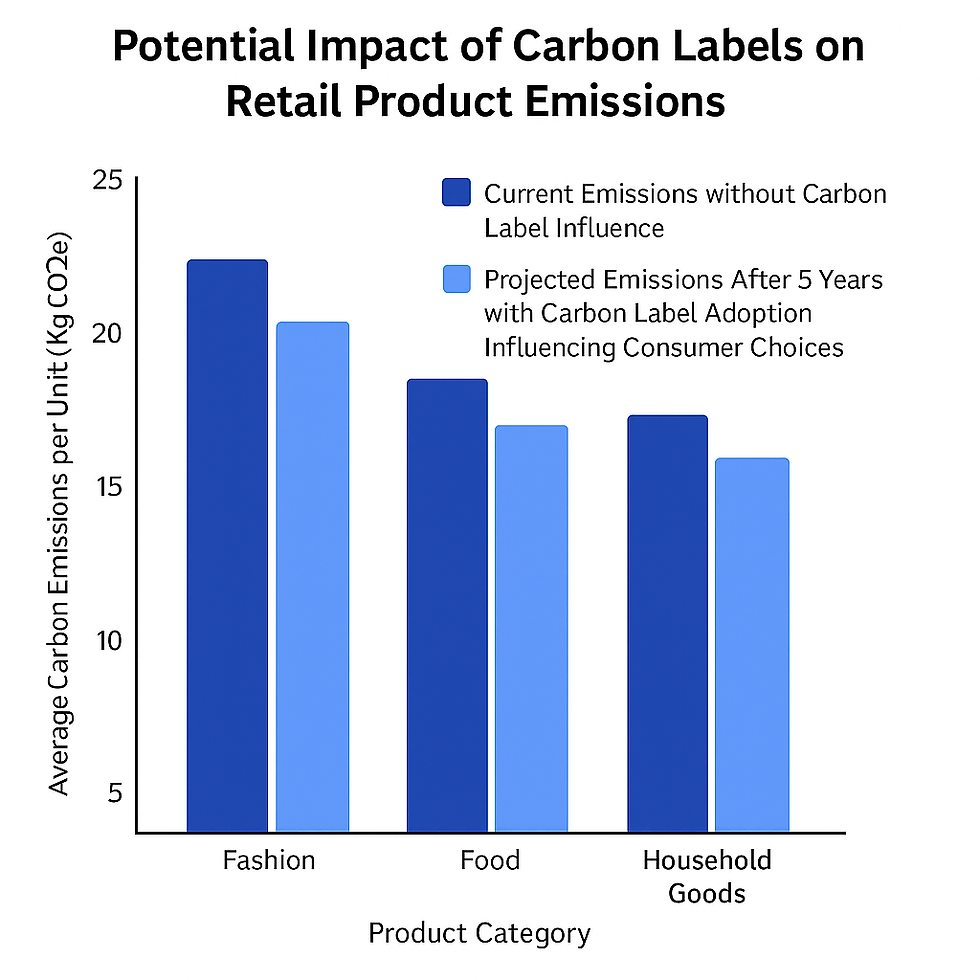
Facts and Figures: The Numbers Speak
Consider this: the fashion industry alone contributes nearly 10% of global carbon emissions, more than international flights and shipping combined. Similarly, food production is responsible for roughly 25-30% of global greenhouse gas emissions, with meat and dairy products being significant contributors.
Yet, until now, consumers have had little way to gauge the carbon impact of, say, a T-shirt or a carton of milk at the point of sale.
A recent pilot program in the UK involving carbon labeling on grocery products showed promising results: 37% of shoppers said carbon labels influenced their purchase decisions, opting for products with lower footprints. This shift could translate into significant emissions reductions if scaled broadly.
Case Study: Iceland’s Carbon Label Experiment
The supermarket chain Iceland pioneered carbon labels on over 70 products starting in 2019. By highlighting the emissions associated with each product, Iceland not only empowered consumers but pushed suppliers toward greener practices. The result? Iceland reported a reduction of 8% in the carbon footprint of labeled products within two years, a compelling testament to the power of transparency.
Why Retailers Can’t Ignore Carbon Labels
For retailers, carbon labels are more than a compliance or marketing gimmick. They represent a strategic imperative. Governments worldwide are tightening regulations related to sustainability disclosures. Meanwhile, a growing segment of consumers will prioritize brands that prove their commitment to climate responsibility.
Moreover, carbon labeling can drive innovation in supply chains, encouraging companies to adopt renewable energy, optimize logistics, and switch to sustainable materials—all while strengthening brand loyalty and trust.
The Call to Action: What Can You Do?
As a consumer, your choices wield enormous power. Demand transparency—look for carbon labels and choose lower-impact products. Support retailers and brands that lead in sustainability. Pressure companies to provide clear environmental data and take genuine steps to reduce their carbon footprint.
As a retailer or manufacturer, start piloting carbon labels now. Collaborate with suppliers and certification bodies to ensure accuracy and trustworthiness. Use this transparency as a catalyst to innovate and differentiate your brand in an increasingly eco-conscious market.
Together, the shift to carbon labeling can become a cornerstone of a more sustainable economy. The question is: will you be part of the change or left behind?


Comments