
Winning Over Eco-Conscious Consumers in 2025
It’s 2025, and green is no longer just a colour—it’s a consumer identity.
From the grocery aisles of São Paulo to fashion boutiques in Berlin, a silent revolution is underway. Shoppers are no longer just asking “How much does it cost?”—they’re asking “What did it cost the planet?”
We are in the age of the eco-conscious consumer. And brands that don’t catch up will be left behind.
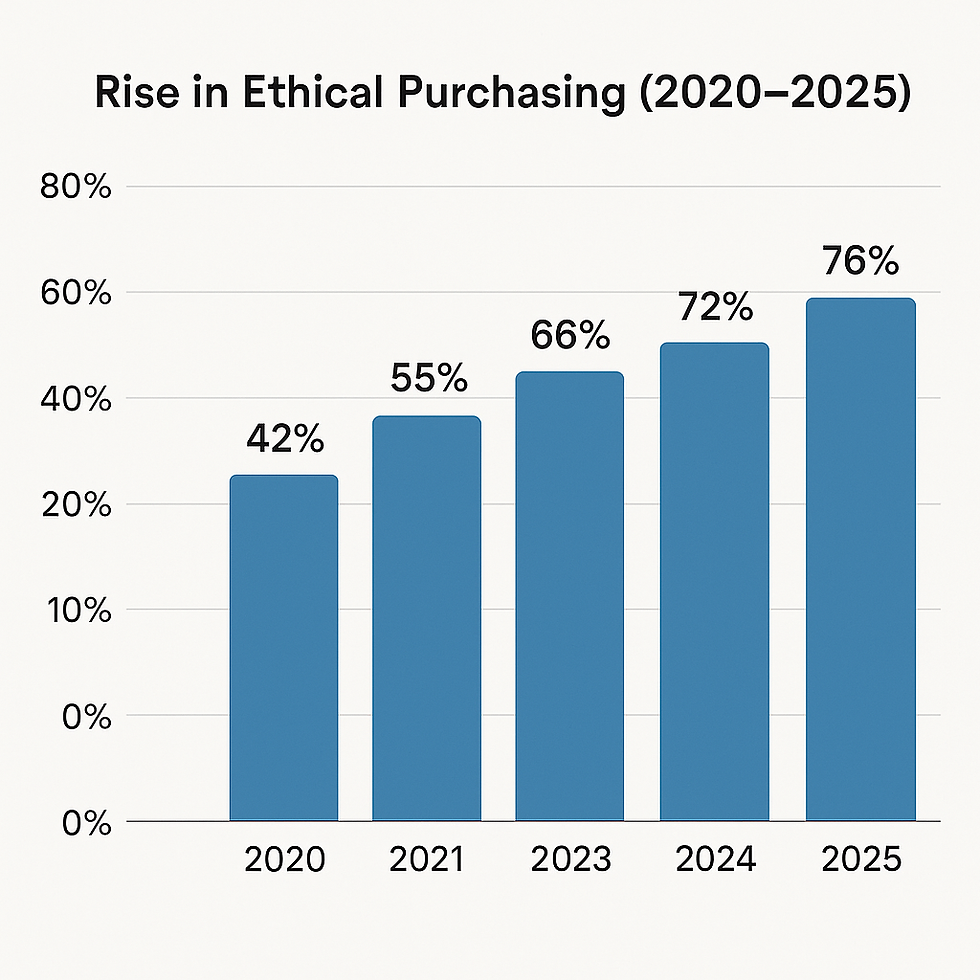
Who Is the 2025 Eco-Conscious Consumer?
The eco-conscious consumer is not a fringe idealist anymore. They're your neighbour. Your niece. Your boss. They're smart, connected, and skeptical. And they’re wielding their wallets like weapons.
A 2024 global NielsenIQ study found that 78% of consumers consider a company’s environmental practices before making a purchase. And among Gen Z? That number soars to 93%.
But here’s the twist: they don’t just want green marketing. They want proof.
Greenwashing Is Dead—Welcome to Radical Transparency
Remember when slapping “eco-friendly” on a label was enough? Not anymore.
Today’s consumers know the difference between recycled packaging and true sustainability. And they have the tools to verify it. Apps like Good On You, DoneGood, and Buycott let shoppers scan, compare, and judge brands in real time.
Companies caught greenwashing—exaggerating their environmental efforts—face a severe backlash. Just ask H&M, which was sued in 2022 for misleading “conscious collection” claims.
In 2025, if you’re not radically transparent, you’re not trusted.
Case Study: Patagonia’s Profit With Purpose
Patagonia has long been the poster child for sustainability. But in 2022, the company made a bold move: founder Yvon Chouinard gave away the company—legally transferring ownership to a trust that funnels profits into fighting the climate crisis.
What happened next? A spike in brand loyalty and record sales in 2023.
Consumers aren’t just buying jackets—they’re buying into a mission.
Data Speaks: Sustainability Is Now a Bottom-Line Issue
Let’s look at the numbers:
Brands with strong ESG (Environmental, Social, Governance) ratings saw 28% higher consumer retention (Deloitte, 2024).
67% of millennials said they’d pay more for sustainable products (IBM Institute for Business Value).
Companies that prioritized sustainability saw up to 40% growth in emerging markets.
This is no longer CSR (corporate social responsibility). This is survival strategy.
What Eco-Conscious Consumers Actually Want
It’s not about being perfect—it’s about being honest.
Consumers want:
Full lifecycle visibility – How is it made? Who made it? How is it shipped?
Circular solutions – From refill stations to buy-back programs.
Carbon transparency – What’s your product’s actual footprint?
Inclusive sustainability – Are your green choices only for the elite?
Take the refillable deodorant brand Wild in the UK—it offers chic, plastic-free products, but also runs school campaigns and budget-friendly bundles. That’s how you make green accessible, not elitist.
The Future Is Regenerative, Not Just Sustainable
In 2025, consumers don’t want brands that just “do less harm.” They want brands that do more good.
That means going beyond neutral. It means planting trees, restoring ecosystems, paying fair wages, and building communities.
A great example? Nisolo, a footwear brand that not only offsets emissions but also publishes a “Sustainability Facts Label” for every product—like a nutrition label, but for impact.
That’s the kind of innovation that earns trust.
So What Should Brands Do Right Now?
Here’s your 5-point checklist:
Audit Your Impact – Know your true footprint before your customers do.
Tell Real Stories – Showcase your suppliers, not just your slogans.
Invest in Circularity – Repair, refill, reuse.
Get Certified – B Corp, Fair Trade, Climate Neutral—badges matter.
Invite Accountability – Let your customers hold you to your promises.
In short: be brave. Be vulnerable. And invite your audience into the journey.
A Final Word to Business Leaders (and Consumers Too)
This isn't about jumping on a trend. It's about earning the right to exist in a rapidly changing world.
Eco-conscious consumers are not obstacles—they're opportunities. They’re telling you exactly what they want. And in 2025, ignoring them is not just foolish—it’s fatal.
To those building businesses, this is your moment to lead with values, not just margins. And to those shopping with conscience: keep asking questions, keep demanding better, and keep using your wallet as a weapon for good.
The future belongs to those who earn trust—and give back.


Comments